

Potato bread is a wonderfully soft and moist loaf made with mashed potatoes mixed right into the dough. The starch from the potatoes gives the bread a tender texture and helps it stay fresh longer than many other homemade breads.
While the dough requires an overnight rest in the refrigerator, the active preparation time is short. This cold fermentation develops a richer flavor, making the wait worthwhile for two beautiful, golden loaves.
Why is Potato Bread a Must-Try?
Mashed potatoes add moisture and starch to the dough, resulting in a bread that’s exceptionally soft and less prone to drying out.
Resting the dough in the fridge slows down the yeast activity, which develops a deeper, more complex flavor in the final loaves.
This recipe is designed to produce two loaves at once, so you can enjoy one now and freeze the other for later.
Potato Bread Ingredients
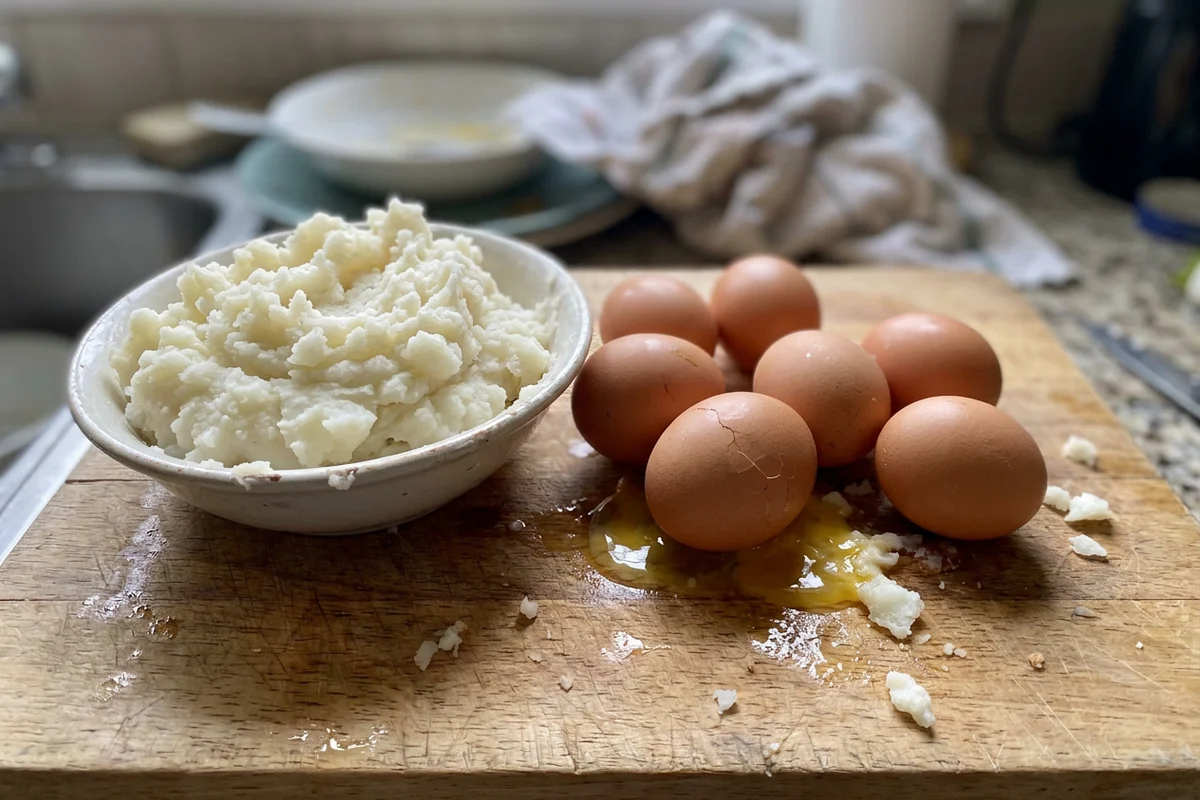
• Mashed Potatoes: Use plain, unseasoned mashed potatoes. Leftovers are fine as long as they don’t contain extra butter, cream, or seasonings.
• Instant Yeast: This recipe uses instant yeast, which doesn’t need to be proofed first. If using active dry yeast, you may want to activate it in the lukewarm water with a pinch of sugar before mixing.
• Potato Water: For a little extra potato flavor and a softer crumb, you can use the water you boiled the potatoes in. Just make sure it has cooled to lukewarm before using.
• All-Purpose Flour: Standard all-purpose flour works well here. You can also use bread flour for a slightly chewier texture.
• Butter: Use unsalted butter so you can control the total amount of salt in the recipe. It should be soft enough to easily incorporate into the dough.
Exact quantities are in the recipe card below.
How to Make Potato Bread
Step 1: Make and Knead the Dough
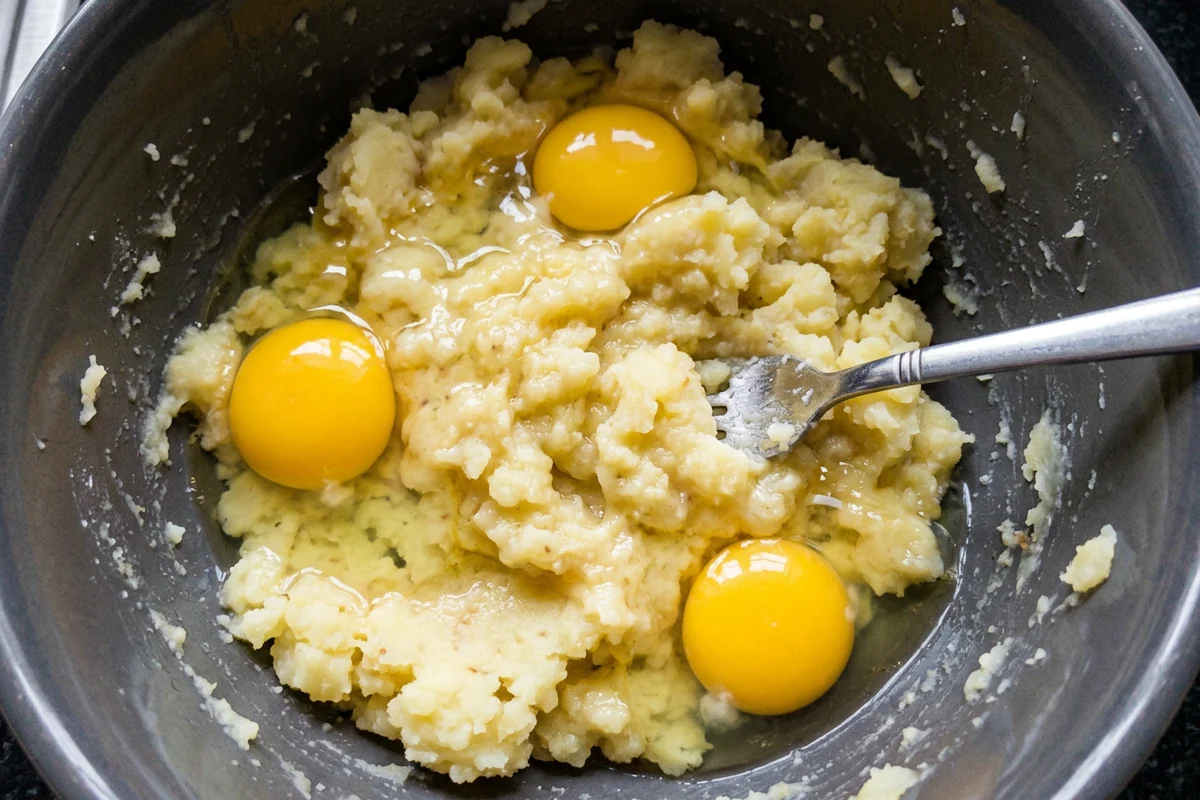
First, combine the wet ingredients, sugar, yeast, salt, and mashed potatoes in a stand mixer. Add the flour and mix to form a shaggy dough. Then, using a dough hook, knead the mixture for about 8 minutes until it becomes a smooth and elastic ball.
Step 2: Chill the Dough Overnight
Transfer the kneaded dough to a large, greased bowl and cover it. Place the bowl in the refrigerator to chill for at least 8 hours or up to 24. This cold rest is key for developing the bread’s flavor and tender texture.
Step 3: Shape and Rise
The next day, divide the cold dough in half on a floured surface. Shape each piece into a 9-inch log and place it in a greased loaf pan. Cover the pans and let the dough rise in a warm spot for 2 to 4 hours, until it’s puffy and risen over the pan rims.
Step 4: Bake the Loaves
Bake the bread in a preheated oven at 350°F (175°C) until golden. About halfway through, cover the loaves with foil to keep the crusts from getting too dark. The bread is ready when a thermometer reads 190°F (88°C) in the center.
Expert Tips for Potato Bread
For best results, bread should be cooked to an internal temperature of 190°F (88°C). An instant-read thermometer is the most accurate way to check for doneness.
The rising time can vary greatly depending on the temperature of your kitchen. Be patient, as the cold dough takes longer to rise.
Use plain, unseasoned mashed potatoes. If you’re making them fresh, be sure they have cooled to room temperature before adding to the dough.
If you don’t have a stand mixer, you can knead the dough by hand on a floured surface for 10-12 minutes until smooth and elastic.
What to Serve with Potato Bread?
This bread is excellent on its own, toasted with butter, or used for sandwiches. It also pairs well with hearty soups and stews.
How to Store and Freeze Potato Bread
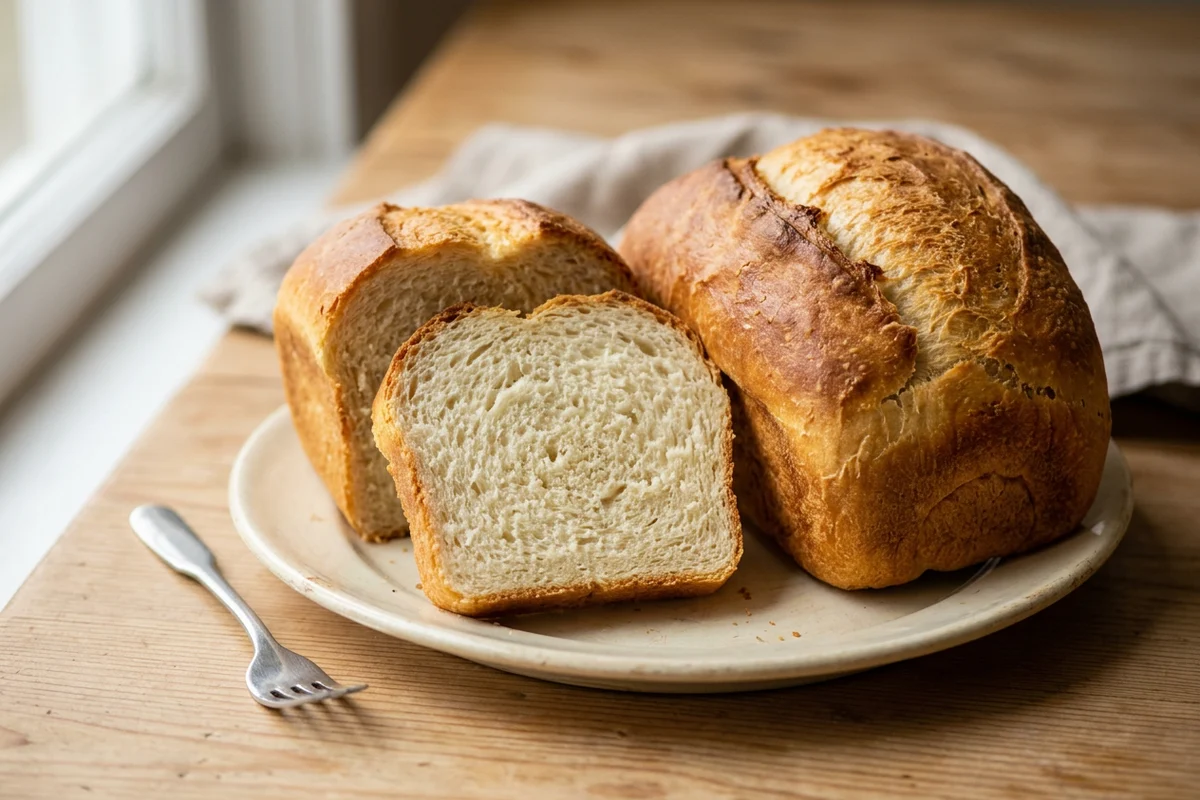
Store the bread in a bag or wrapped tightly at room temperature for up to 4 days. For longer storage, slice the loaf and freeze it in a freezer-safe bag for up to 3 months. Reheat slices in a toaster or oven.
Potato Bread Recipe FAQs
Can I make this without a stand mixer?
Yes, you can knead the dough by hand on a lightly floured surface for about 10-12 minutes, until it’s smooth and elastic. The dough is sticky, so be patient and use a bench scraper to help manage it.
Can I use sweet potatoes instead of regular potatoes?
Yes, you can substitute an equal amount of mashed sweet potato. It will give the bread a slightly different flavor and a pleasant orange hue.
Why does my dough have to rest in the fridge overnight?
The cold fermentation, or ‘retarding’, slows the yeast’s activity. This long, slow rise develops a more complex and rich flavor in the bread that you can’t achieve with a quick rise.
Potato Bread
Ingredients
- 1 tablespoon instant yeast
- 1/2 cup granulated sugar 100g
- 1 1/4 cups lukewarm water 300ml
- 12 tablespoons unsalted butter softened, 170g
- 2 1/2 teaspoons salt 15g
- 2 large eggs
- 1 cup plain mashed potatoes at room temperature, 200g
- 6 1/2 cups all-purpose flour 780g
Instructions
- In the bowl of a stand mixer, combine the yeast, sugar, lukewarm water, softened butter, salt, and eggs. Add the mashed potatoes and mix with the paddle attachment on low speed until combined.
- Add the flour to the bowl. Mix on low speed until a shaggy dough forms and most of the flour is incorporated.
- Switch to the dough hook. Knead on medium speed for 7 to 8 minutes. The dough should become smooth, shiny, and pull away from the sides of the bowl, though it will still be soft.
- Transfer the dough to a large, lightly greased bowl. Cover the bowl with plastic wrap and refrigerate for at least 8 hours, or up to 24 hours.
- Grease two 9x5-inch loaf pans. Remove the cold dough from the refrigerator, place it on a lightly floured surface, and divide it in half.
- Shape each half into a log about 9 inches long and place them seam-side down in the prepared pans.
- Cover the pans loosely with greased plastic wrap. Let the loaves rise in a warm, draft-free place for 2 to 4 hours, or until the dough has risen about 1 inch above the rim of the pans.
- Near the end of the rising time, preheat your oven to 350°F (175°C).
- Bake the loaves for 25 minutes. Tent the pans with aluminum foil to prevent over-browning and continue to bake for another 15 to 20 minutes.
- The bread is done when it is deep golden brown and an instant-read thermometer inserted into the center registers 190°F (88°C). Let the loaves cool in the pans for 5 minutes before turning them out onto a wire rack to cool completely before slicing.
Notes


