

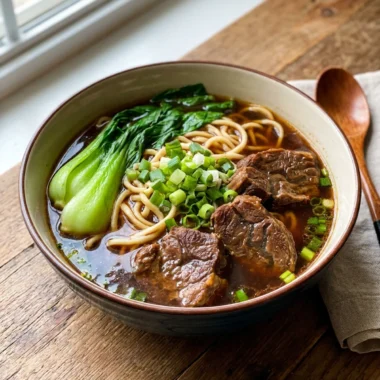
Taiwanese beef noodle soup is a beloved comfort food, known for its deeply savory broth and tender chunks of braised beef. Served over a bed of chewy noodles with fresh greens, it’s a hearty and satisfying one-bowl meal.
The key to this dish is time. A long, slow simmer transforms simple ingredients into a complex and flavorful broth while making the beef melt-in-your-mouth tender. It’s a rewarding weekend cooking project that fills your home with a wonderful aroma.
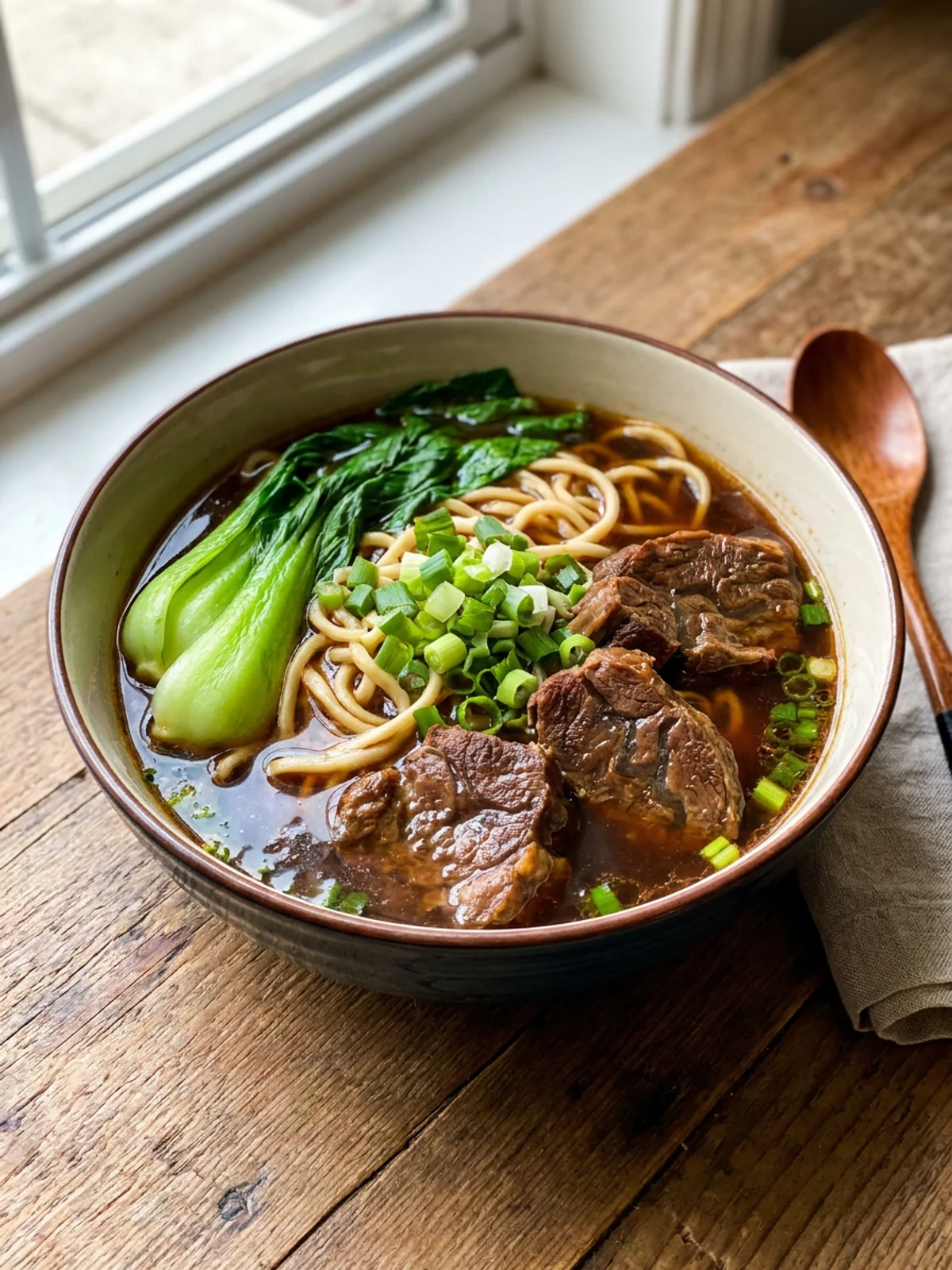
Why is Taiwanese Beef Noodle Soup a Must-Try?
Blanching the beef before braising is an important first step. It removes impurities and results in a cleaner, clearer broth.
Toasting the whole spices in a dry pot for a minute awakens their essential oils. This simple action makes the finished soup much more fragrant.
Slowly simmering the beef over low heat is essential. This gentle braising process breaks down the tough connective tissues in the beef, making it exceptionally tender.
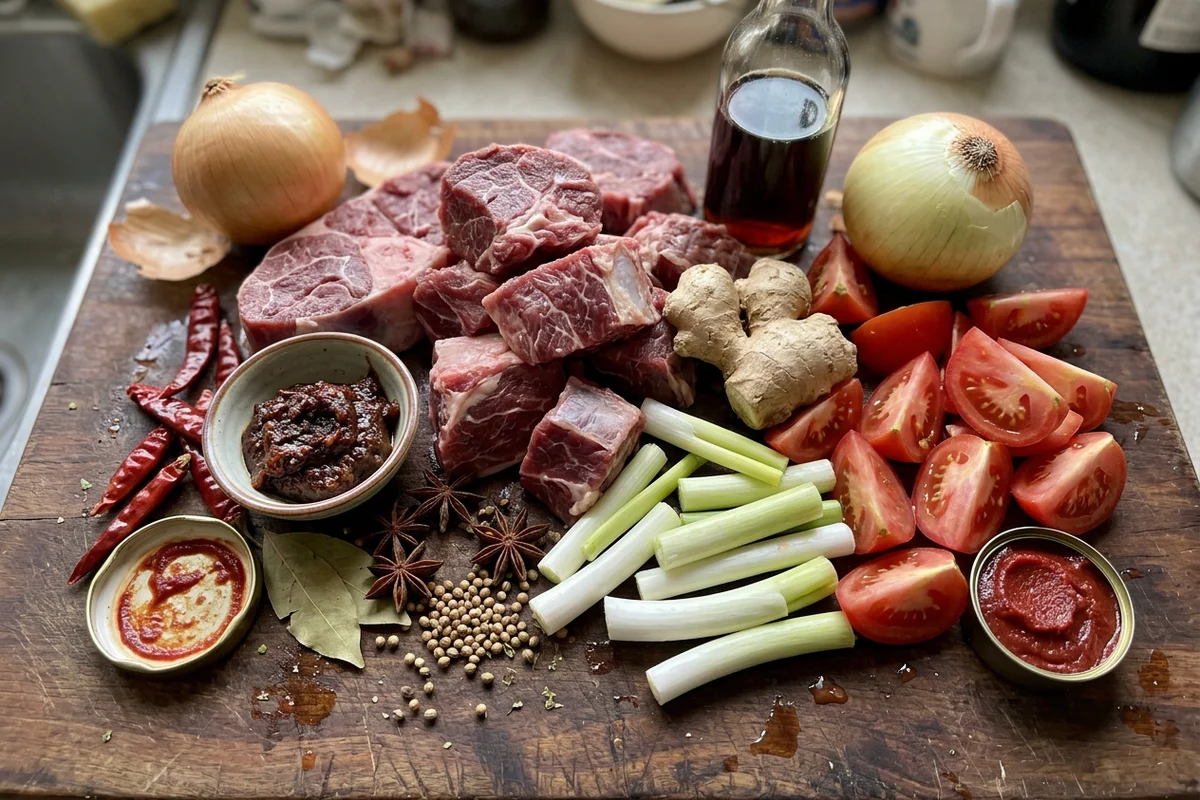
Taiwanese Beef Noodle Soup Ingredients
• Beef Shank: This cut contains a lot of collagen, which melts during braising to create a rich broth and tender meat. Boneless chuck roast is a widely available substitute.
• Doubanjiang: A salty and spicy fermented broad bean paste that gives the broth its signature flavor and color. It can be found in most Asian grocery stores.
• Shaoxing Wine: This amber-colored Chinese rice wine adds a distinct aroma and depth. If you cannot find it, you can substitute with dry sherry.
• Rock Sugar: Common in Asian cooking, rock sugar provides a mild, clean sweetness that balances the savory and spicy elements. Dark brown sugar works well as a substitute.
Exact quantities are in the recipe card below.
How to Make Taiwanese Beef Noodle Soup
Step 1: Prepare the Beef and Spices
First, blanch the beef cubes in boiling water to remove any impurities for a cleaner broth. While the beef is blanching, gently toast the whole spices like star anise and cinnamon in a dry pot until they smell fragrant.
Step 2: Build the Soup Base
In the same pot, sauté the fresh aromatics like onion, tomato, and garlic until they are soft. Stir in the doubanjiang, tomato paste, and sugar to create a rich flavor base for the soup.
Step 3: Braise the Beef
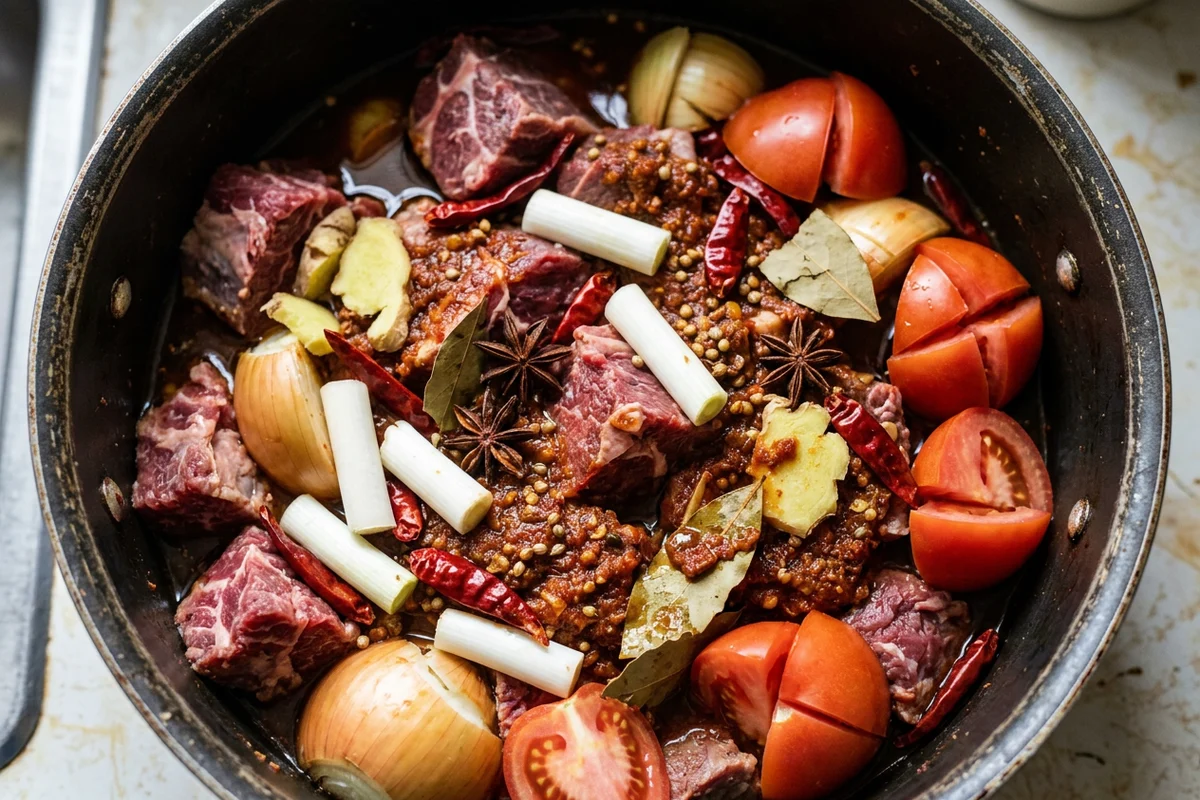
Add the blanched beef back to the pot, along with the toasted spices, soy sauces, and wine. Pour in enough water to cover, then bring to a boil and reduce to a gentle simmer. Cover and cook for at least two hours until the beef is very tender.
Step 4: Cook Noodles and Assemble
Towards the end of the braising time, cook the noodles and blanch the bok choy. Divide the noodles and greens among serving bowls, then ladle the hot beef and broth over the top. Garnish and serve right away.
Expert Tips for Taiwanese Beef Noodle Soup
Different brands of doubanjiang have different levels of salt and spice. Adjust the amount to your preference.
The beef broth can be made one or two days in advance. Let it cool completely before storing it in the refrigerator. Reheat gently on the stove before serving.
Beef shank is preferred for its texture after long cooking, but a well-marbled chuck roast is a great alternative.
For food safety, whole cuts of beef should reach a minimum internal temperature of 145°F (63°C) and be allowed to rest for 3 minutes. This dish is braised far beyond that point to achieve tenderness.
What to Serve with Taiwanese Beef Noodle Soup?
This soup is a complete meal on its own and does not require any side dishes.
How to Store and Freeze Taiwanese Beef Noodle Soup
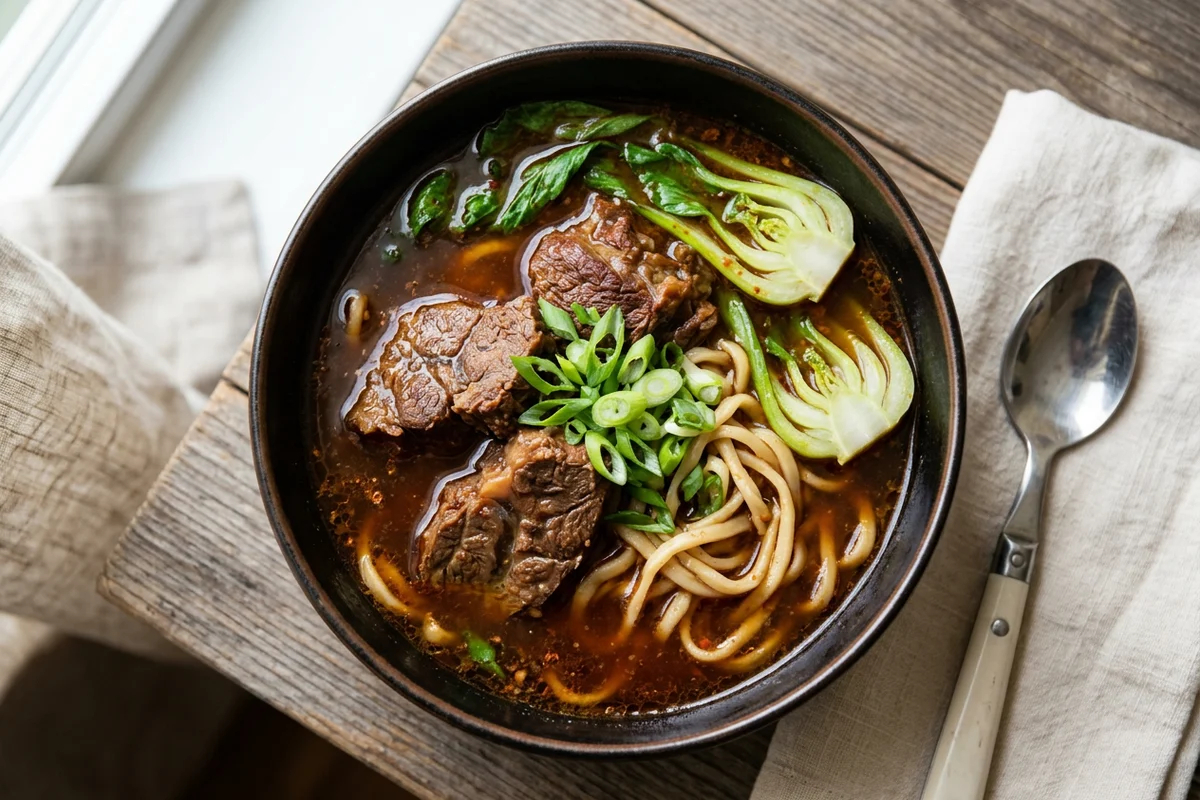
Store leftover beef and broth separately from the noodles in an airtight container in the refrigerator for up to 3 days. The broth and beef can also be frozen for up to 3 months. Reheat the broth gently on the stovetop until simmering before serving with freshly cooked noodles.
Taiwanese Beef Noodle Soup Recipe FAQs
Can I make this in a pressure cooker or slow cooker?
Yes. For a pressure cooker (like an Instant Pot), braise the beef on high pressure for 45-50 minutes. For a slow cooker, cook on low for 6-8 hours or on high for 3-4 hours.
Is Taiwanese beef noodle soup very spicy?
The spice level is adjustable. It comes from the doubanjiang and any dried chilis you add. You can use a mild doubanjiang and omit the chilis for a non-spicy version, or add more for extra heat.
What kind of noodles are best for this soup?
Fresh or dried Chinese wheat noodles are traditional. Look for noodles that are medium-thick and have a good chew, often labeled as ‘plain noodles’ or ‘white noodles’. You can find them in the refrigerated or dried goods section of an Asian market.
Taiwanese Beef Noodle Soup
Ingredients
- 3 lbs beef shank or chuck roast cut into 1.5-inch cubes, 1.4 kg
- 4 slices fresh ginger for blanching
- 2 tbsp neutral oil
- 1 large yellow onion cut into 1-inch pieces
- 2 large tomatoes each cut into 8 wedges
- 6 garlic cloves smashed
- 3 slices fresh ginger
- 6 scallions white parts cut to 2-inch lengths, green parts thinly sliced for garnish
- 2 dried red chilis or to taste
- 1 tbsp doubanjiang spicy broad bean paste
- 1 tbsp tomato paste
- 1 tbsp dark brown sugar or rock sugar
- 1/2 cup Shaoxing wine 120 ml
- 1/4 cup soy sauce 60 ml
- 3 tbsp dark soy sauce
- 3 star anise
- 1 cinnamon stick
- 2 bay leaves
- 1 tsp coriander seeds
- 8 cups water divided, 1.9 L
- 1 lb fresh Chinese wheat noodles 450 g
- 1 lb bok choy trimmed, 450 g
- Salt to taste
- For serving : chili oil chopped pickled mustard greens, optional
Instructions
- Place the beef cubes and 4 slices of ginger in a large pot. Cover with cold water by 2 inches. Bring to a boil and cook for 5 minutes, skimming any foam that rises. Drain the beef in a colander and rinse the pieces with water. Discard the cooking liquid and ginger.
- While the beef blanches, toast the spices. Place the star anise, cinnamon stick, bay leaves, and coriander seeds in a dry Dutch oven or large pot over medium heat. Toast for 1-2 minutes until fragrant. Remove the spices and set them aside.
- Add the neutral oil to the same pot over medium-high heat. Add the onion, tomatoes, garlic, 3 slices of ginger, and scallion whites. Sauté for 3-4 minutes until the onion and tomatoes soften. Stir in the doubanjiang, tomato paste, and brown sugar, and cook for 1 minute.
- Return the blanched beef to the pot. Stir to coat the beef with the aromatics. Pour in the Shaoxing wine, soy sauce, and dark soy sauce. Add the toasted spices and 8 cups of water, or enough to cover everything by about 1 inch. Bring the mixture to a boil.
- Once boiling, reduce the heat to low, cover the pot, and let it simmer gently for 2 to 2.5 hours. The beef should be very tender when done. The internal temperature will be well above 145°F (63°C).
- When the beef is nearly done, cook the noodles according to package directions in a separate large pot of boiling water. In the last 3-4 minutes of cooking, add the bok choy to the pot with the noodles to blanch. Drain both and rinse the noodles briefly to remove excess starch.
- Taste the beef broth and adjust seasoning with salt or more soy sauce if needed. Remove the whole spices before serving.
- Divide the cooked noodles and bok choy among four large bowls. Ladle the beef and hot broth over the noodles. Garnish with the sliced scallion greens and optional chili oil or pickled mustard greens. Serve immediately.
Notes


